
A blocked soakaway usually shows itself through standing water long after rain, overflowing gullies and downpipes, and a waterlogged patch of garden near the soakaway. To tell whether it’s blocked or has failed, an engineer checks the pipes feeding it and watches how fast water drains out of it. An engineer can often jet blocked pipework clear. A soakaway that has silted up, or sits in ground that won’t absorb water, usually needs replacing or redesigning.
Getting the diagnosis right saves money. Jetting a pipe won’t help if the ground itself can’t take the water, and digging a new soakaway won’t help if the real problem is a blocked gully upstream.
This guide explains how soakaways work, how to read the warning signs and what engineers can and can’t fix.
What Is a Soakaway and How Does It Work?
A soakaway takes rainwater from your roof, drive or patio and releases it into the ground instead of the sewer. Downpipes and surface water gullies feed it through underground pipes.
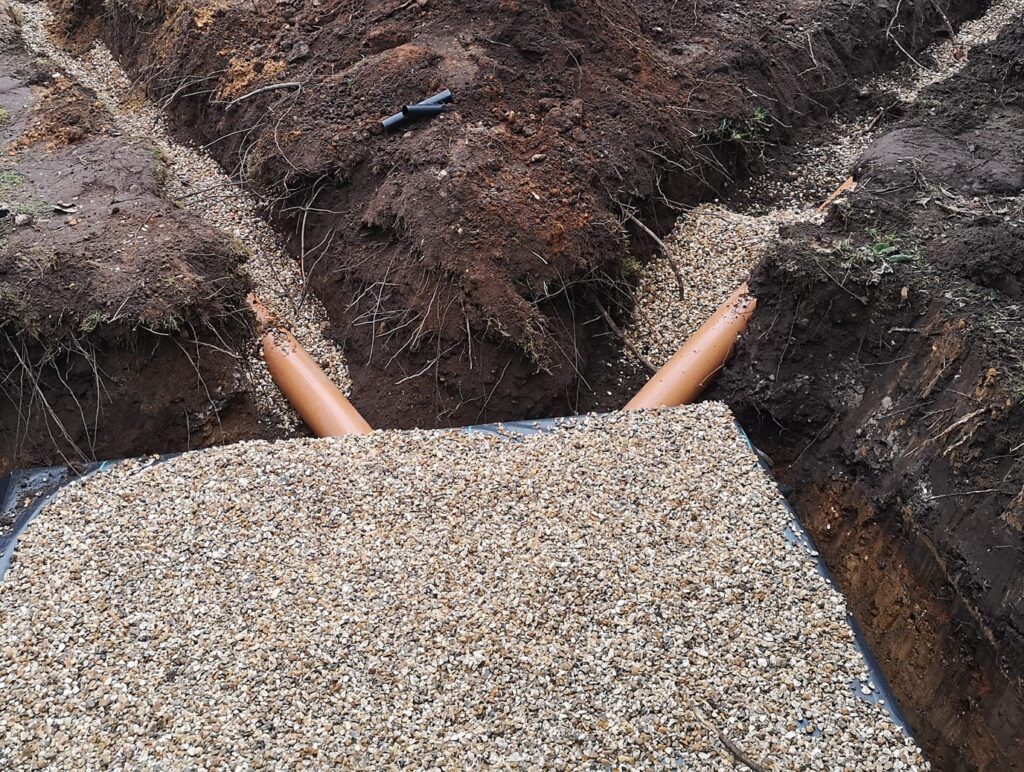
Older soakaways are usually holes filled with rubble or broken brick. The gaps between the stones hold water while it slowly soaks out into the soil. Modern soakaways use plastic crates wrapped in a geotextile membrane, a fabric that lets water out but keeps soil from getting in. Crates hold far more water for their size and often include an inspection point.
Soakaways should only take surface water. Foul water from toilets, sinks and washing machines must go to the foul sewer or a proper treatment system.
Common Signs of a Blocked Soakaway
The first sign is usually water that won’t go away. Lawns, patios or drives hold standing water long after rain, and the same spots flood after every downpour. Around the soakaway itself, a patch of garden stays waterlogged when the rest has dried out.
The drainage above ground shows the strain too. Gullies and downpipes overflow during heavy rain, rainwater gullies drain slowly, and damp or water staining appears on walls near the downpipes. Our soakaway clearance team sees these signs most often.
These signs can also come from blocked connecting pipes, saturated ground or a soakaway that’s too small, so investigate before you dig.

Blocked Pipework or Failed Soakaway: What’s the Difference?
| Blocked pipework | Failed or silted soakaway | |
|---|---|---|
| What’s wrong | Leaves, silt or debris block the pipe feeding the soakaway | The soakaway is full of silt, or the ground can’t absorb water |
| Typical sign | Gully overflows, but the soakaway itself looks dry | Water reaches the soakaway but stays there for days |
| Inspection chamber | Dry or nearly empty downstream of the blockage | Full of water that drains slowly or not at all |
| Usual fix | Jetting and clearing the pipe | Clearing if accessible, otherwise replacement or redesign |
With blocked pipework, the soakaway itself may be fine. Leaves, moss, roof grit and silt wash into rainwater gullies and down the pipe. If they block the pipe, water can’t reach the soakaway at all and backs up at the gully instead. In Swindon, water collected around a rainwater gully because the obstruction extended into the wider underground system. Our engineer cleared it with high-pressure jetting, with no need to replace the gully or pipe. Our guide to blocked outside drains and gullies covers this in more detail.
A failed soakaway is the opposite case: the water reaches it but can’t escape into the soil. Silt fills the gaps in the rubble, roots grow into it, or the surrounding soil can’t absorb water fast enough. Some soakaways never worked properly because the original builder didn’t test the ground or made the soakaway too small.
Surface Water Collecting Around Your Property
Water that sits against walls causes more than a soggy lawn. It can soak into masonry, raise moisture levels in floors and walls, and wash fine soil from beneath paths and foundations. Our guide on whether a leaking drain can cause damp explains how drainage faults lead to damp.
Check where your downpipes discharge. A downpipe that runs into a blocked gully, or straight onto the ground by the wall, pushes water exactly where you don’t want it.
New paving changes the picture as well. A large patio or tarmac drive sends rainwater straight to the nearest gully instead of letting it soak into the lawn, so the soakaway receives far more water in a storm than it did before. If standing water appeared soon after new paving went down, tell the engineer, because it points to a capacity problem rather than a blockage.
How Do Engineers Investigate Soakaway Problems?
NOW Drainage follows the same five-step process on every soakaway job:
- Assessment. The engineer checks the gullies, downpipes and visible connections, and asks when the problem started and how it behaves in heavy rain.
- Investigation. A CCTV drain survey of the accessible pipework shows blockages, roots, collapses and silt in the pipes leading to the soakaway.
- Clearance. The engineer clears accessible blockages, using high-pressure jetting where it’s safe and effective.
- Performance check. The engineer runs water through the system and watches how quickly it drains away.
- Recommendations. If clearance doesn’t restore performance, the engineer explains why and recommends repairs, new pipework or a new arrangement.

Rainwater not draining away? Call NOW Drainage on 0800 001 6568. We’ll find out whether the pipe or the soakaway is to blame.
Which Obstructions Can Engineers Clear?
Engineers can usually clear leaves, moss and silt from gullies and the connecting pipes, along with debris and fine roots in the pipework. They can often clean out modern crate soakaways with an inspection or jetting point too.
Clearance has limits inside the soakaway itself. A rubble-filled soakaway has no access point, and jetting can’t shift silt packed between the stones. Once silt or roots have choked a rubble soakaway, it rarely recovers.
When Is Replacement or Redesign Necessary?
Replacement or redesign makes sense when silt has choked the soakaway or it has suffered structural damage, or when it was never big enough for the roof and paving draining into it. Extensions, patios and new drives often tip an adequate soakaway into failure by adding water its original design never allowed for. Siting matters as well: a soakaway too close to the house needs moving, and one in ground that can’t absorb water fast enough won’t recover, whatever you clear.
A new soakaway usually uses plastic crates wrapped in geotextile, sized for the area it serves. NOW Drainage recently installed a new six-crate soakaway in Ferndown. Building Regulations guidance (Approved Document H) sets the rules for siting and sizing soakaways. The RICS guide to drainage compliance notes that a percolation test decides whether the ground is suitable, and that soakaways shouldn’t sit within 5 metres of a building or road.

If the ground simply won’t take the water, the engineer may recommend another route, such as a connection to a surface water sewer where the water company permits it, or a different drainage system. Our guide comparing soakaways, French drains and ACO drains explains the alternatives.
Limitations Caused by Ground Conditions and Groundwater
Some ground drains well, and some doesn’t. Clay soils absorb water slowly, so even a large soakaway in heavy clay can fill faster than it empties. After weeks of rain, saturated ground has no spare capacity, which is why a soakaway that copes in summer can struggle in winter. Compacted ground from building work or heavy vehicles slows infiltration further.
Groundwater sets a hard limit. Where the water table rises high, the water has nowhere to go, and soakaway design guidance expects the base of the soakaway to sit above the highest groundwater level.
That’s why a soakaway can underperform even when the pipes feeding it run clear. A percolation test, which measures how quickly water drains from a test pit, tells you whether a soakaway can work in your ground before you build one.
Frequently Asked Questions
How do I know if my soakaway is blocked?
Standing water long after rain, overflowing gullies and downpipes, and a waterlogged area around the soakaway are the usual signs. An engineer can check whether something blocks the pipes feeding it or whether the soakaway itself has stopped draining.
Can you unblock a blocked soakaway?
Often the pipes feeding it can, with jetting. Engineers can sometimes clear crate soakaways with an inspection point too. A rubble-filled soakaway packed with silt rarely recovers and usually needs replacing.
How long should a soakaway take to drain?
It depends on its size, the ground and the amount of rain. Design guidance aims for a soakaway to empty enough between storms to cope with the next one. A soakaway that still holds water days after rain has a problem.
How long does a soakaway last?
A well-designed soakaway in suitable ground can last for decades. Silt, roots and extra water from extensions or new paving shorten its life, especially for older rubble soakaways.
Does a soakaway need maintenance?
Yes, a little. Keep gutters, downpipes and rainwater gullies free of leaves and silt so debris doesn’t wash into the soakaway. If your soakaway has an inspection point, check it after heavy rain to see how quickly it empties, and book a survey if it starts to drain more slowly than before.
Can I connect my downpipes to the sewer instead?
Only with permission. Building Regulations guidance prefers soakaways where the ground allows, and the water company decides whether to accept surface water into its sewer.
How NOW Drainage Can Help
We clear, investigate and replace soakaways across Dorset, Hampshire, Wiltshire, Bristol and Somerset, including Swindon, Bournemouth and Poole. Our soakaway clearance team surveys the pipework, clears what it can and tells you honestly when a new soakaway or a different design would serve you better. Our drain installations team builds new soakaways and drainage.
Our engineers will tell you whether the pipe, the soakaway or the ground is the real problem before you spend anything on digging. Call 0800 001 6568 or request a free quote.


